
Specialty containers
Insulated Containers
Insulated steel containers that moderate temperature swings and reduce condensation, without the power requirement of a refrigerated unit.
About insulated containers
An insulated container sits between a standard dry box and a full reefer. The walls, roof and doors carry insulation, so internal temperature moves far more slowly than in a bare steel container. That reduces condensation, protects contents from extreme heat and cold, and makes the interior considerably more comfortable to work in.
Because there is no refrigeration machinery, there is no power requirement and no service schedule. Buyers typically choose insulated units for equipment that is sensitive to temperature cycling, for storage in exposed locations, and as the starting point for a workspace or welfare conversion.
Related pages
Delivered pricing. Delivery is a flat $450, estimated 5 business days.
From the catalog
Available units
Live products matching this configuration.
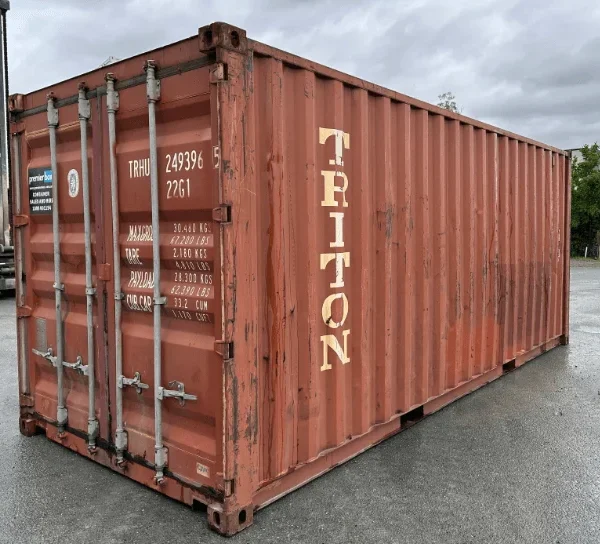
20FT Insulated Container(Used)
- Footprint
- 20 ft x 8 ft
- Height
- 8 ft 6 in
Delivery $450 · 5 business days
Applications
Where these units are used
Temperature-sensitive storage
Paints, adhesives, electronics and materials that suffer in extreme heat or cold.
Workspace conversions
A far better starting point than a bare container for any occupied space.
Industrial storage
Consumables and spares where condensation is the main risk to the contents.
Agricultural storage
Feed and supplies that need protection from temperature swings.
Buying considerations
What to check before ordering
- Insulation reduces internal dimensions. Check the internal figures rather than the external ones if space is tight.
- Insulated units still need ventilation. Sealing a container completely encourages condensation rather than preventing it.
- If you need an actively controlled temperature, a refrigerated unit is the correct product.
- Consider how you will fix out the interior, as fixings through insulation need care to avoid cold bridging.
Questions
Frequently asked
What is the difference between insulated and refrigerated?
An insulated container slows heat transfer but has no active cooling. A refrigerated container has a powered refrigeration unit that holds a set temperature. Insulated units need no power supply.
Will an insulated container stop condensation?
It reduces it substantially by keeping surface temperatures closer to the air temperature inside. Ventilation is still important, and how the container is loaded matters too.
Next step
Compare before you commit
Line up any containers from the catalog side by side, or answer five short questions and let the finder narrow it down.