
Customer stories
Five projects, start to finish
Each story below is a development example written during the build of this website. They are not accounts of real customers or real transactions. They exist to show the level of detail we intend to publish once genuine project stories are available.
About these stories
All five are development examples. Names, locations, project details and outcomes are illustrative. Nothing on this page should be read as a claim about work Container Flex Depot has carried out.
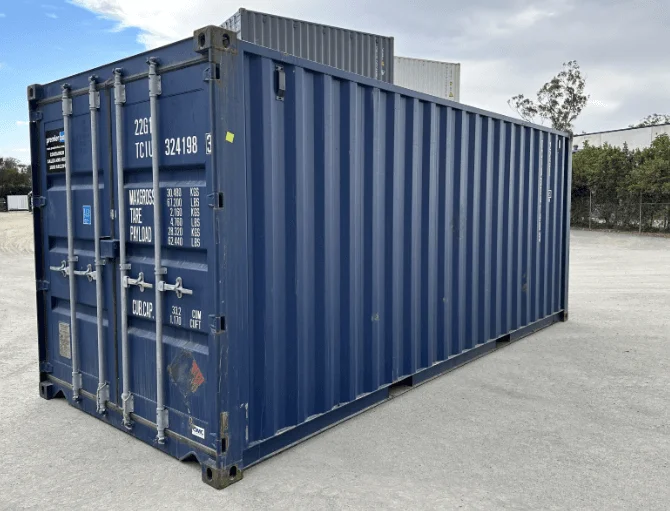
Construction company
Two units replacing eighteen months of hire on a phased build
A regional contractor running a phased commercial build had been hiring site storage monthly. With the programme extended, the hire cost had begun to exceed the purchase price of equivalent units.
- Situation
- A civil and building contractor with a compound on a live site, running an eighteen month programme across three phases.
- Challenge
- Monthly storage hire had already run for eleven months. The compound was tight, with a single gated approach and overhead cabling at the entrance.
- Product solution
- Two 20 ft standard dry units rather than one 40 ft, chosen specifically because the gate approach could not accommodate a longer delivery vehicle.
- How it was used
- One unit held fixings, consumables and small power tools with shelving fitted along one wall. The second held finishes and was kept locked to a separate key set.
- Outcome
- Storage cost became a one-off rather than a recurring line. Both units were relocated to the next project at the end of the programme, which a hire agreement would not have allowed.
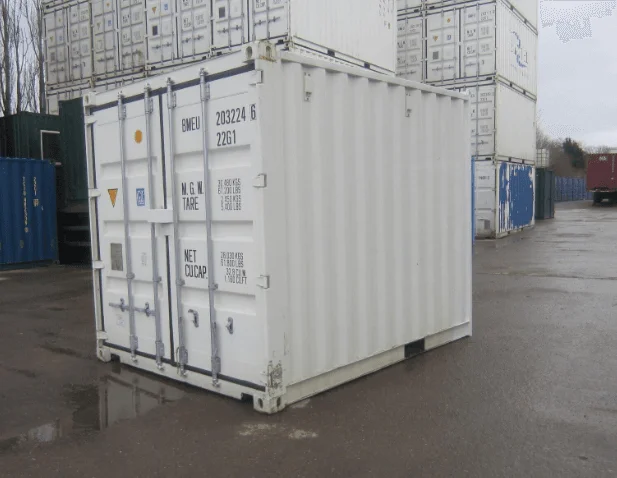
Small business
A compact unit that solved a stockroom problem without a lease
A retail business with no back-of-house space needed secure overflow storage in a small rear yard, and the unit would be visible to customers.
- Situation
- An independent retailer occupying a leased unit with no usable stockroom and a small enclosed yard to the rear.
- Challenge
- The yard measured under four metres in usable depth. Anything stored there would be partly visible from the customer entrance, so appearance mattered.
- Product solution
- A 10 ft one-trip container in a clean white finish, selected for the compact footprint and the undamaged exterior.
- How it was used
- Fitted with simple shelving for boxed stock, with the doors positioned to open away from the customer sightline.
- Outcome
- Roughly doubled the usable storage without changing the lease or applying for additional premises. The unit was chosen over a cheaper used alternative purely on appearance.
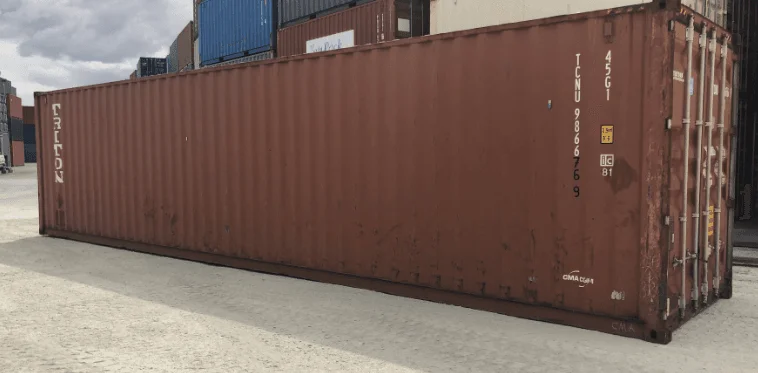
Farm operation
Bulk storage sited away from the yard buildings
A mixed arable and livestock holding needed dry, secure storage for feed and machinery parts at a distance from the main yard.
- Situation
- A working farm with a second field entrance used for machinery access, roughly four hundred metres from the main buildings.
- Challenge
- No power or services at the intended location, and a track that becomes soft between late autumn and early spring.
- Product solution
- A 40 ft high cube unit, chosen for the volume and the extra headroom for bagged feed stacked on pallets.
- How it was used
- Positioned on compacted hardcore with concrete pads under the corner castings, doors facing the track for tractor and telehandler access.
- Outcome
- Delivery was scheduled for late summer specifically to avoid soft ground. The unit has needed no services and the additional height allowed a second pallet layer.
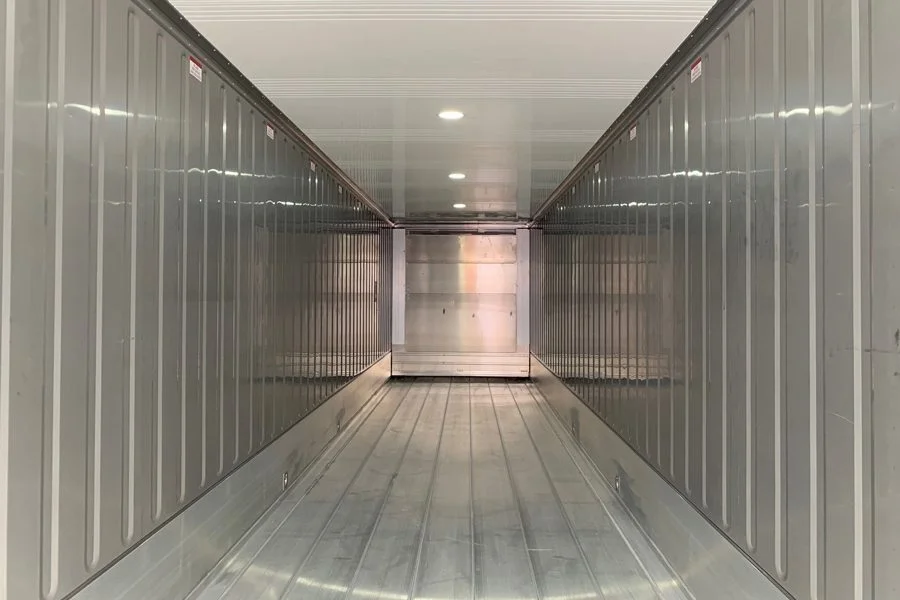
Commercial property
Chilled storage added to an existing catering operation
A catering business operating from a commercial yard needed additional chilled capacity for seasonal peaks without rebuilding the existing cold room.
- Situation
- An event catering operation with fixed cold room capacity sized for average rather than peak demand.
- Challenge
- Peak weeks required roughly double the chilled volume. Building work was not viable, and the yard had a three-phase supply at one corner only.
- Product solution
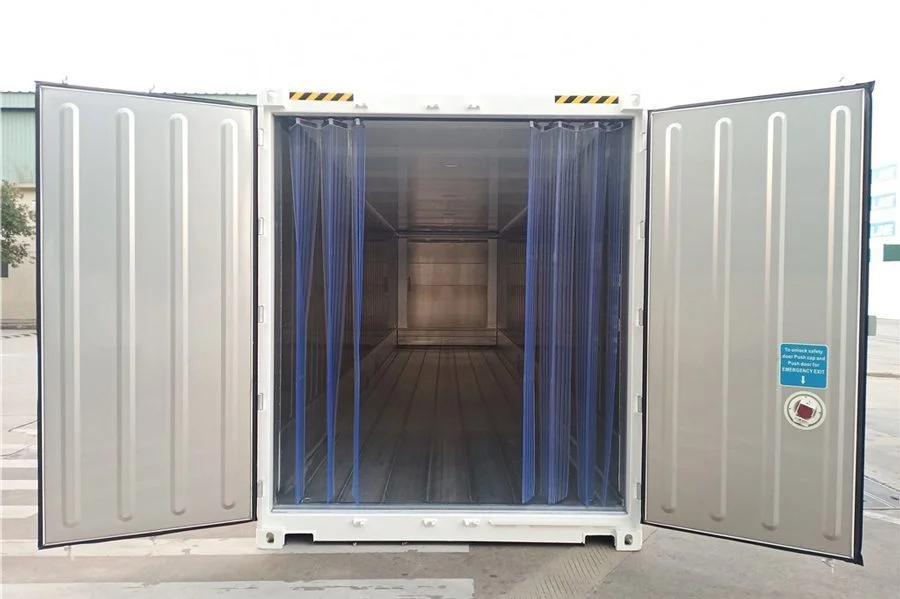
- A 40 ft refrigerated container, positioned to reach the existing power supply without a long temporary run.
- How it was used
- Operated as overflow chilled storage during peak periods and as ambient dry storage with the machinery off at other times.
- Outcome
- Peak capacity was solved without construction. Power access dictated the placement, which is why the supply position was confirmed before ordering rather than after delivery.
Contractor
A mobile unit that moves with the work
A specialist installation contractor working across multiple sites needed secure tool storage that could travel between them.
- Situation
- A small installation firm with four crews, previously storing tools in vans overnight and losing time to daily loading.
- Challenge
- Frequent relocation, restricted urban access on several sites, and a history of overnight theft from vehicles.
- Product solution
- An 8 ft unit with a welded lock box, selected because it could be delivered and repositioned on sites where a 20 ft unit could not be placed.
- How it was used
- Fitted out with racking and a fixed tool board, relocated between sites as each contract began.
- Outcome
- Daily loading time reduced and vans were emptied overnight. The compact footprint was the deciding factor over capacity, which is the opposite of how most buyers approach the decision.
The common thread
What these examples have in common
Four patterns show up in almost every container purchase, whatever the sector.
Access decides the size
More buyers are limited by the approach to the site than by the space at the destination. Measure the route before you shortlist by capacity.
Placement decides the doors
Which way the doors face determines how usable the unit is day to day, and how secure it is overnight. Decide this before delivery, not during it.
Condition follows visibility
Where the unit will be seen by customers, condition grade matters. Where it will not, used and refurbished units offer the same structure for less money.
Services come first
Power, and occasionally water, dictate where a specialty unit can go. Confirm the supply position before the order rather than after the truck has left.
Have a project like these
Tell us the constraints
Send the site dimensions, the approach route and what will go inside. We will tell you which units in the catalogue fit.